bittern-like whou Tentative
Putative nocturnal call type
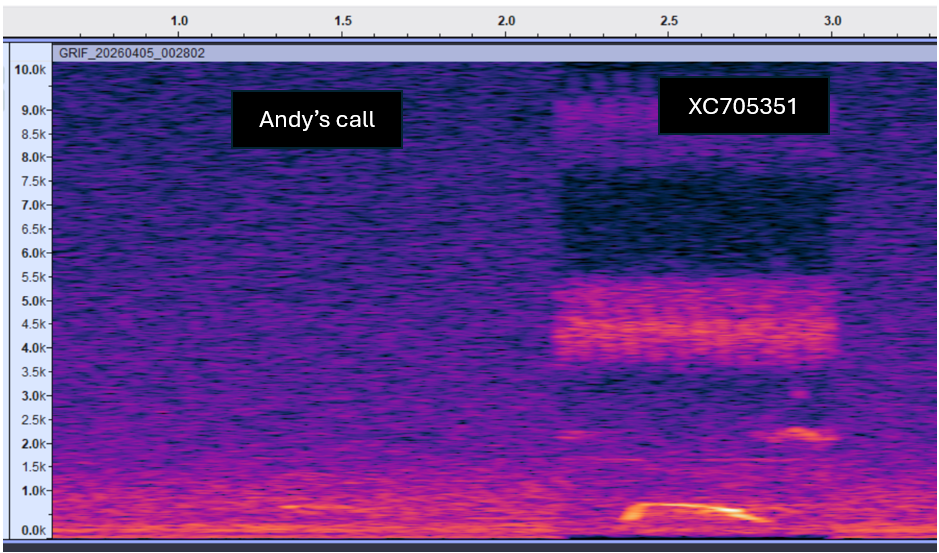
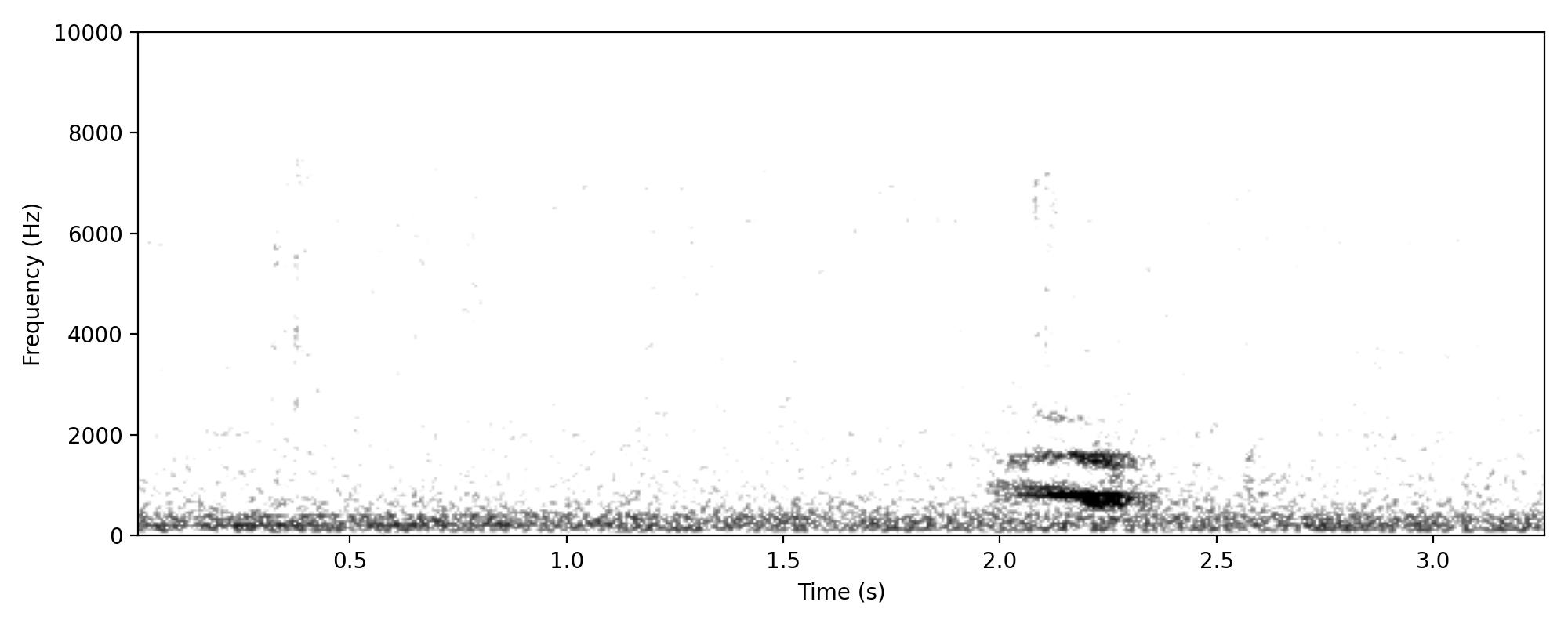
A low-frequency, hollow, booming call rendered as a drawn-out “whou” or “whoo”. The note is relatively simple in structure, appearing in the spectrogram as a compact, slightly diffuse band concentrated in the low frequencies (generally below ~1 kHz), with limited harmonic structure. The call has a deep, resonant, and somewhat bittern-like quality to the human ear.
Behavioural context
Unknown. The call has been recorded during nocturnal periods and may be associated with flight or local movement, but there is currently insufficient information to determine its behavioural context. If correctly attributed, it may represent a poorly documented nocturnal or flight call of the species.
Evidence for identification
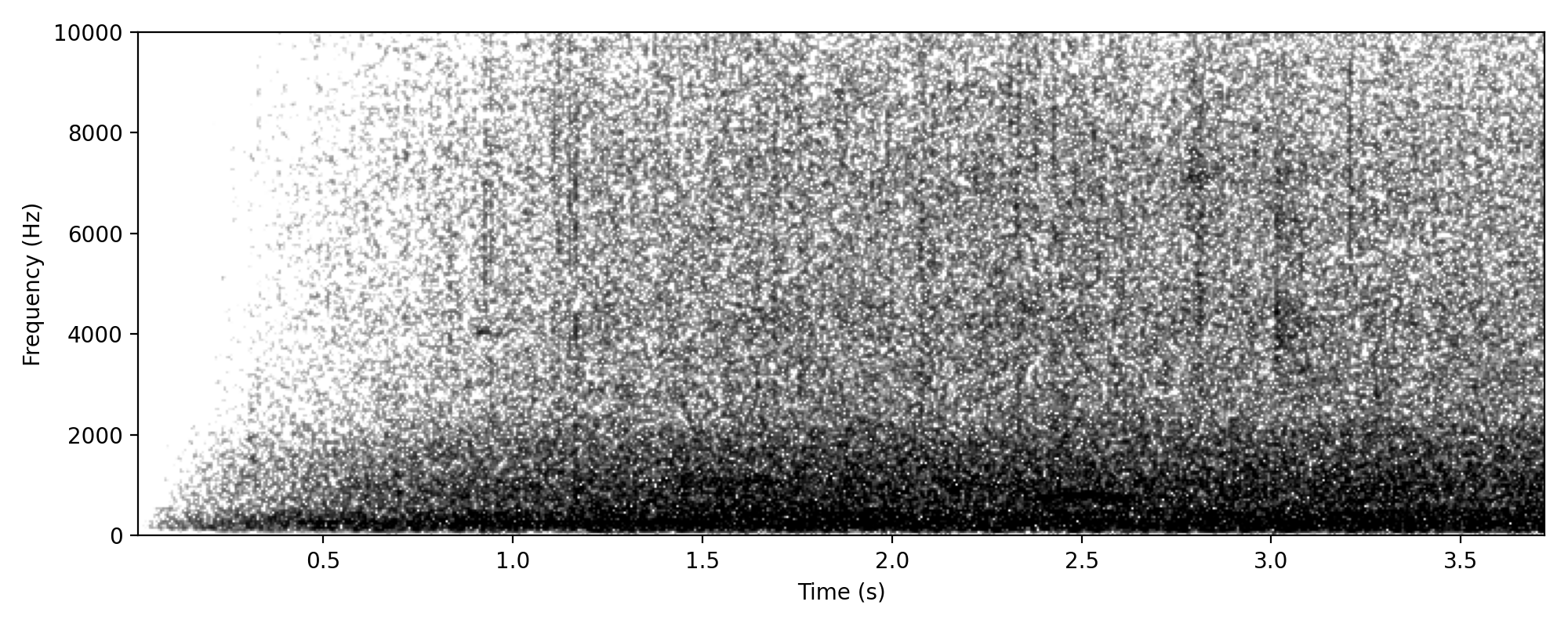
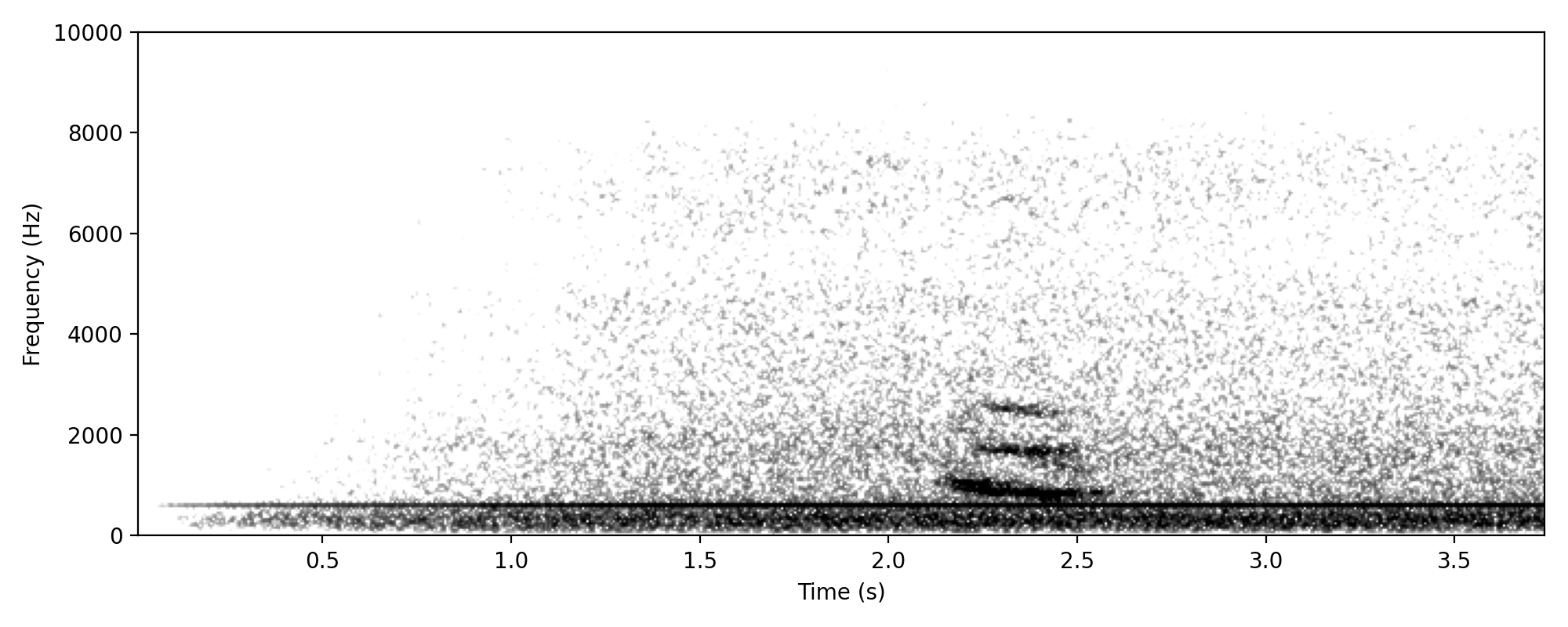
This call type is provisionally attributed to Black Bittern based on its low-frequency, booming quality and general similarity to published descriptions of bittern vocalisations. However, there are few or no available reference recordings of nocturnal or flight calls for this species, and no close spectrographic match has yet been identified. The identification therefore remains tentative and is based primarily on acoustic character and ecological plausibility rather than direct comparison with confirmed recordings.
Confidence statement
Low confidence. Black Bittern is considered the most plausible candidate based on the acoustic character of the call, but the identification is not supported by close reference matches and relies on inference rather than diagnostic features. Additional recordings or confirmed comparisons are required to strengthen this assignment.
Similar species / confusion risks
Dog barking is a possibility. Other bitterns or large waterbirds capable of producing low-frequency booming calls could potentially produce similar sounds. Limited availability of comparative recordings makes it difficult to exclude alternative species at this stage.
Project detections: 7 annotations; 6 nights; recorded in April, May, August, September; most recent detection 30 Aug 2026.
Project clips
Single call
Reference comparison