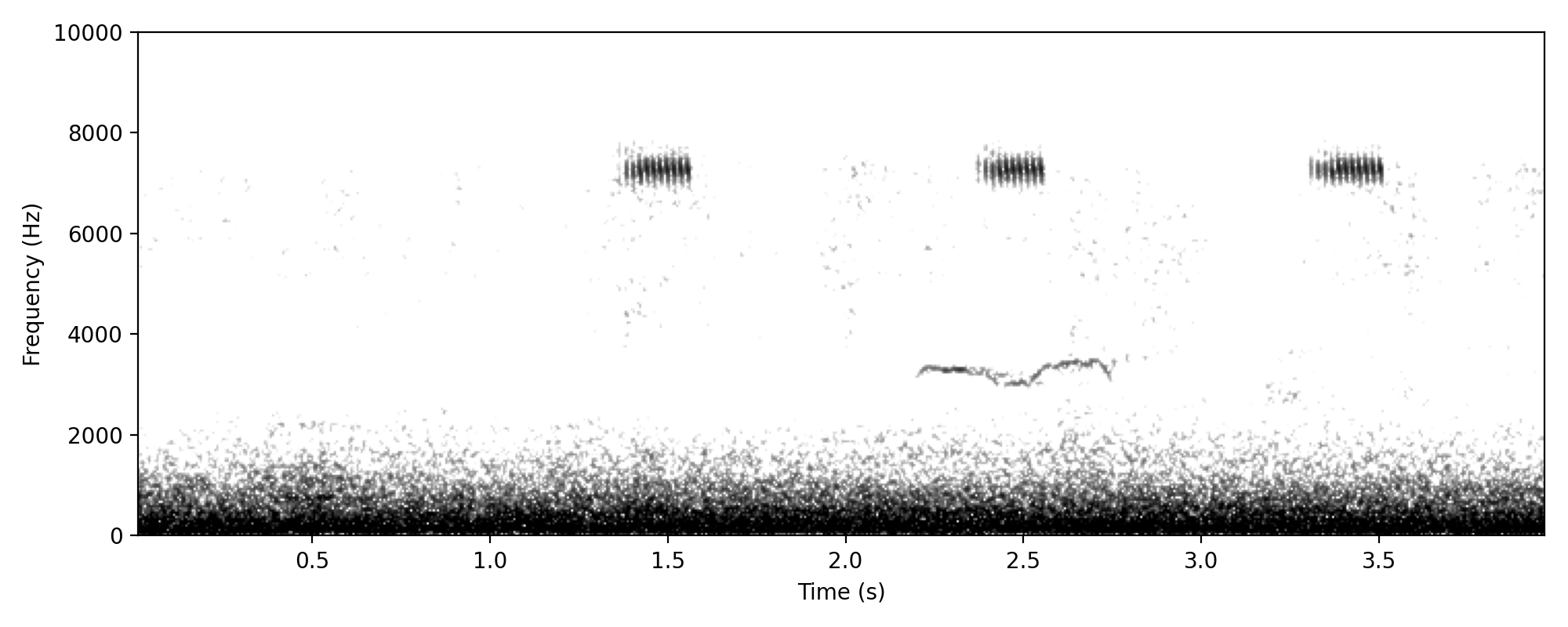
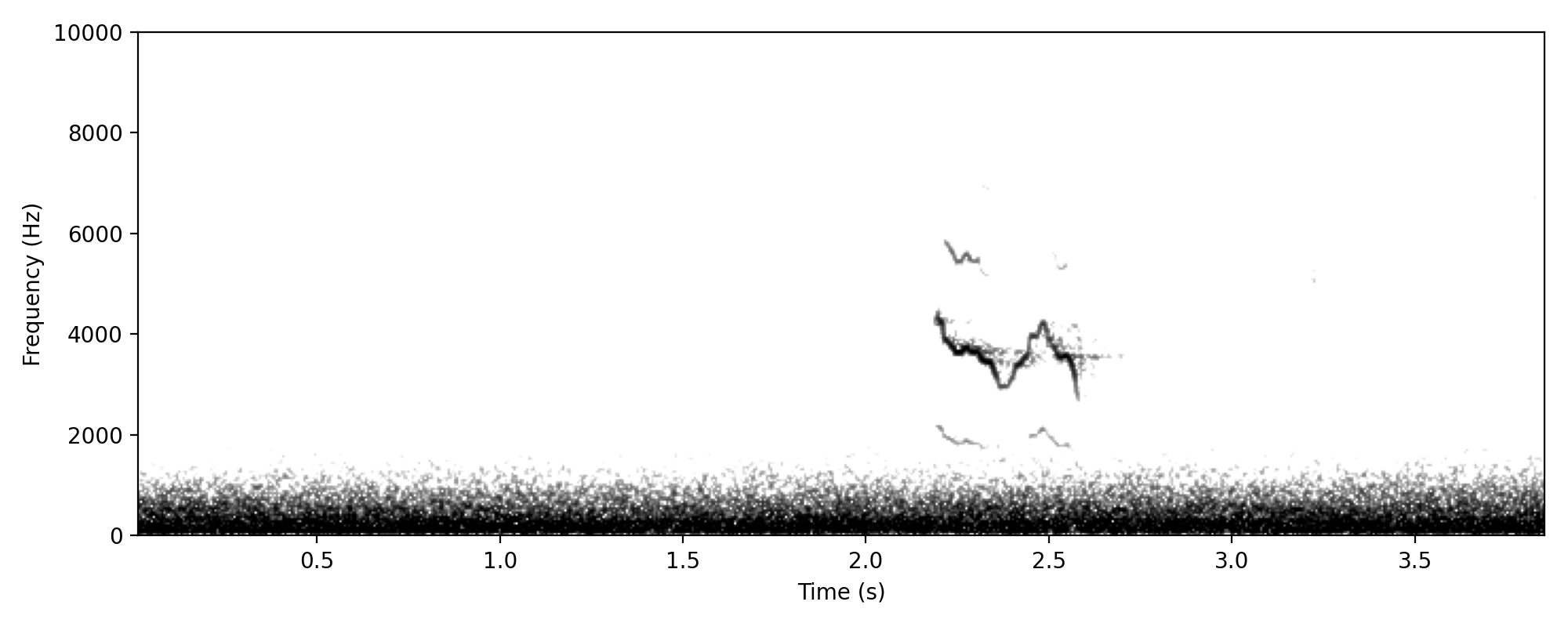
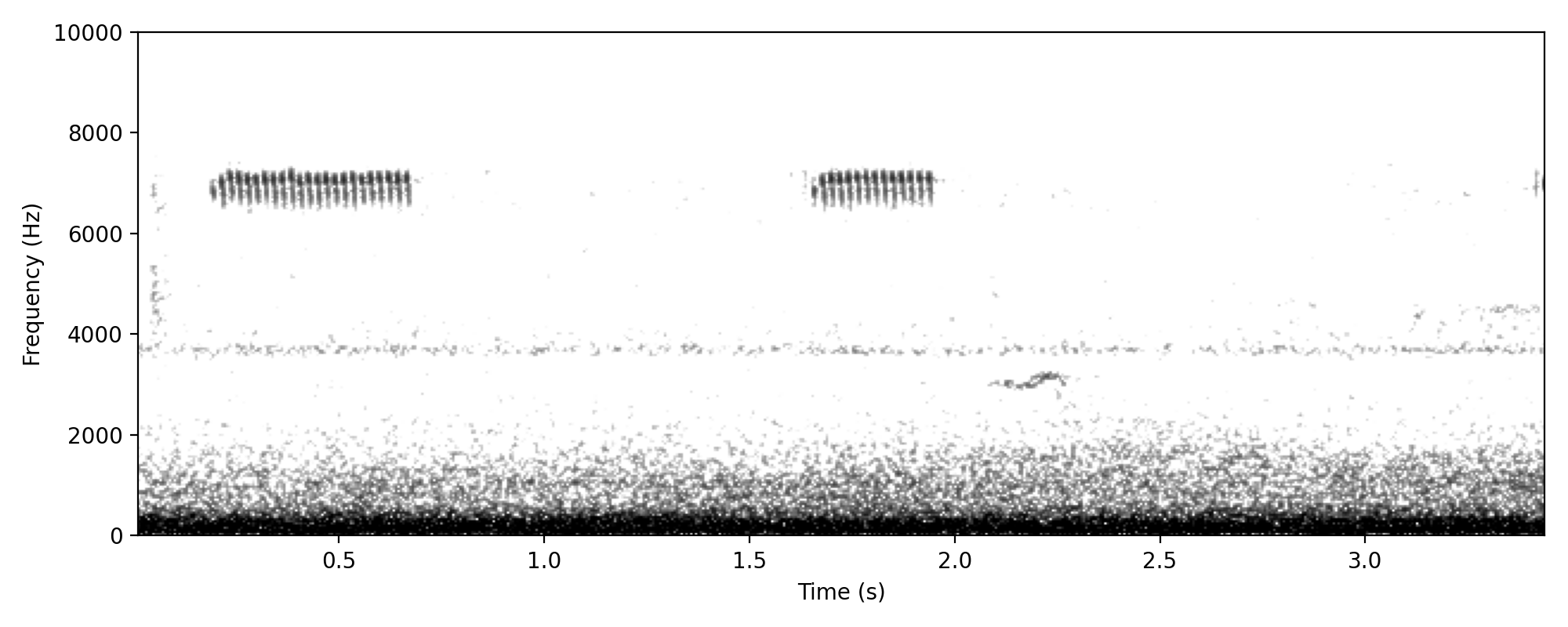
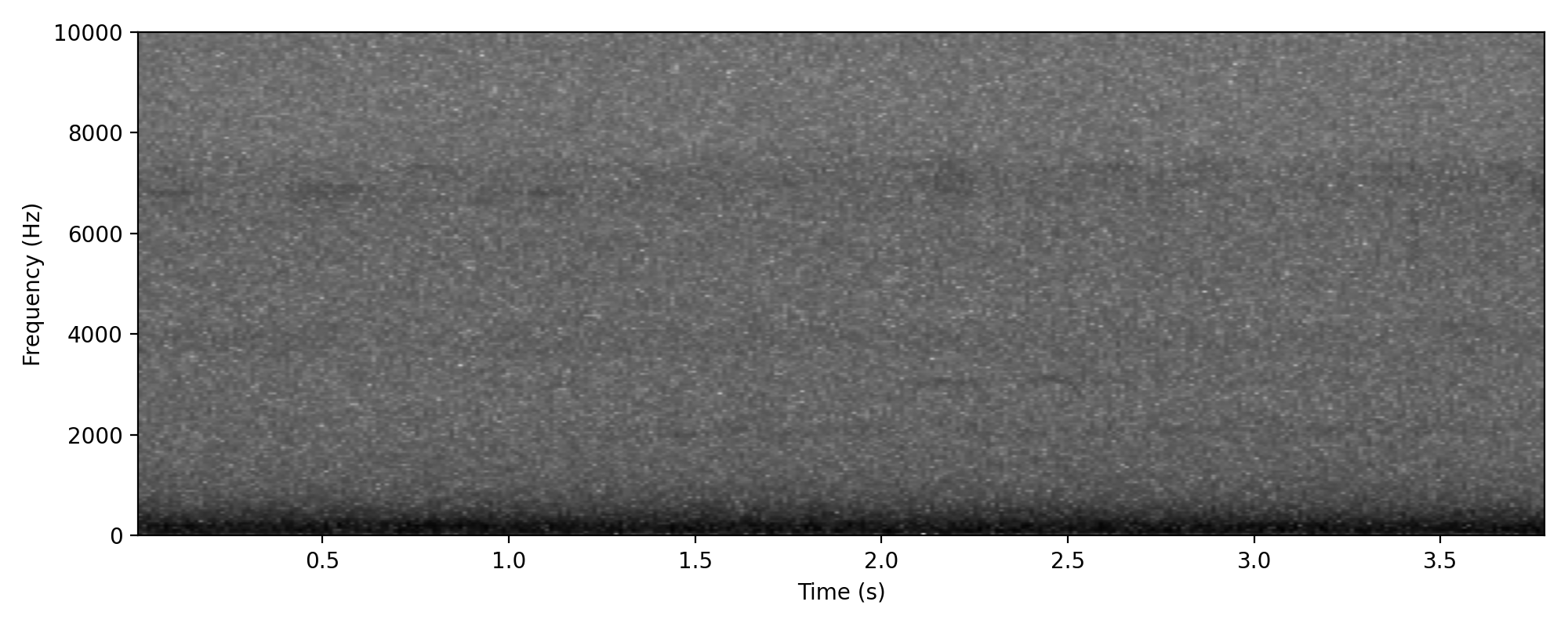
Sounds like a Brown Quail, but call is merged into a single wavering note that first goes down then up. Sequences indicate this call is given by a bird flying over. Treated as presumed Brown Quail for the moment, but needs deeper research.
Evidence for identification
Just on sound and broad structure so far, needs detailed speccy investigation.
Confidence statement
Rather tenative
Similar species / confusion risks
Several non-passerines
Project detections: 4 annotations; 1 night; recorded in March; most recent detection 25 Mar 2026.
Project clips
Carindale (-27.52, 153.11), 25 Mar 2026, 20:45:03, Annotation 1632, Annotator: Richard Fuller, No processing applied
Brown Quail jagged m
Project detections: 2 annotations; 1 night; recorded in April; most recent detection 09 Apr 2026.
Project clips
Carindale (-27.52, 153.11), 09 Apr 2026, 04:06:00, Annotation 7905, Annotator: Richard Fuller, No processing applied
Brown Quail ONE-SHORT Probable
Putative nocturnal call type
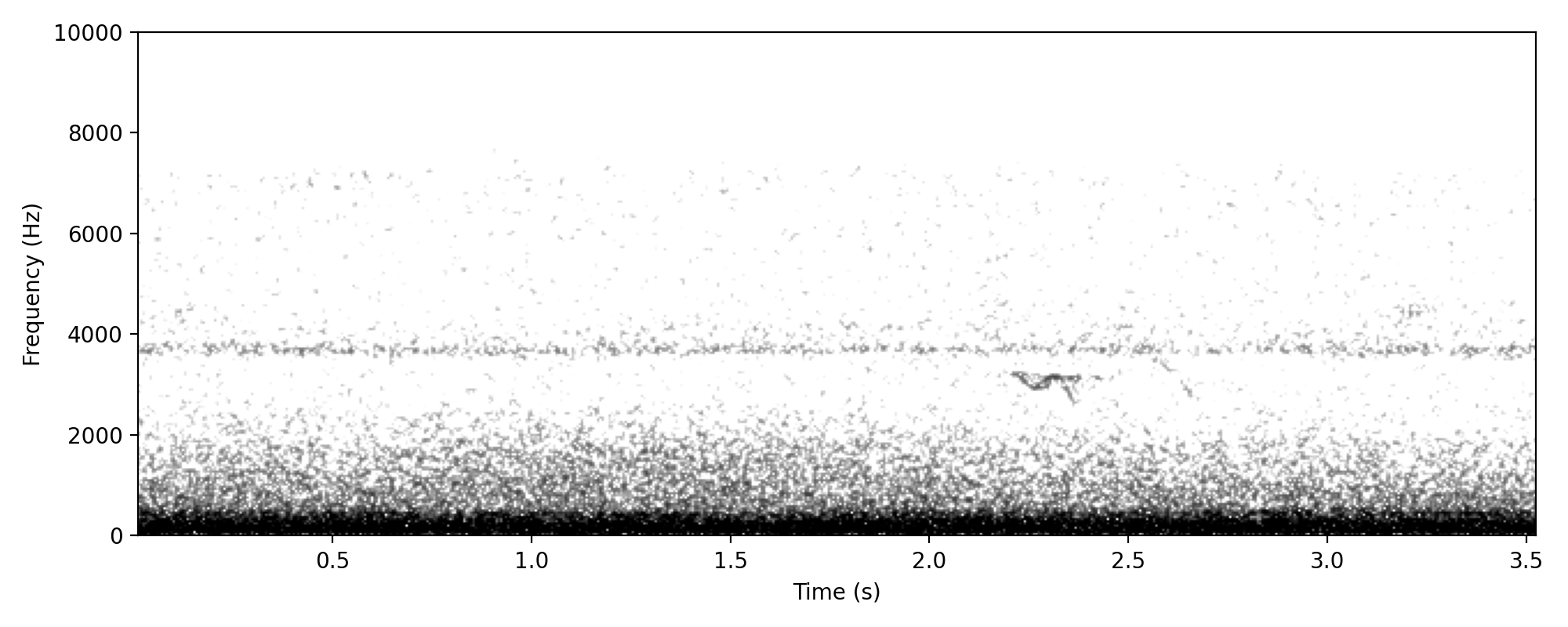
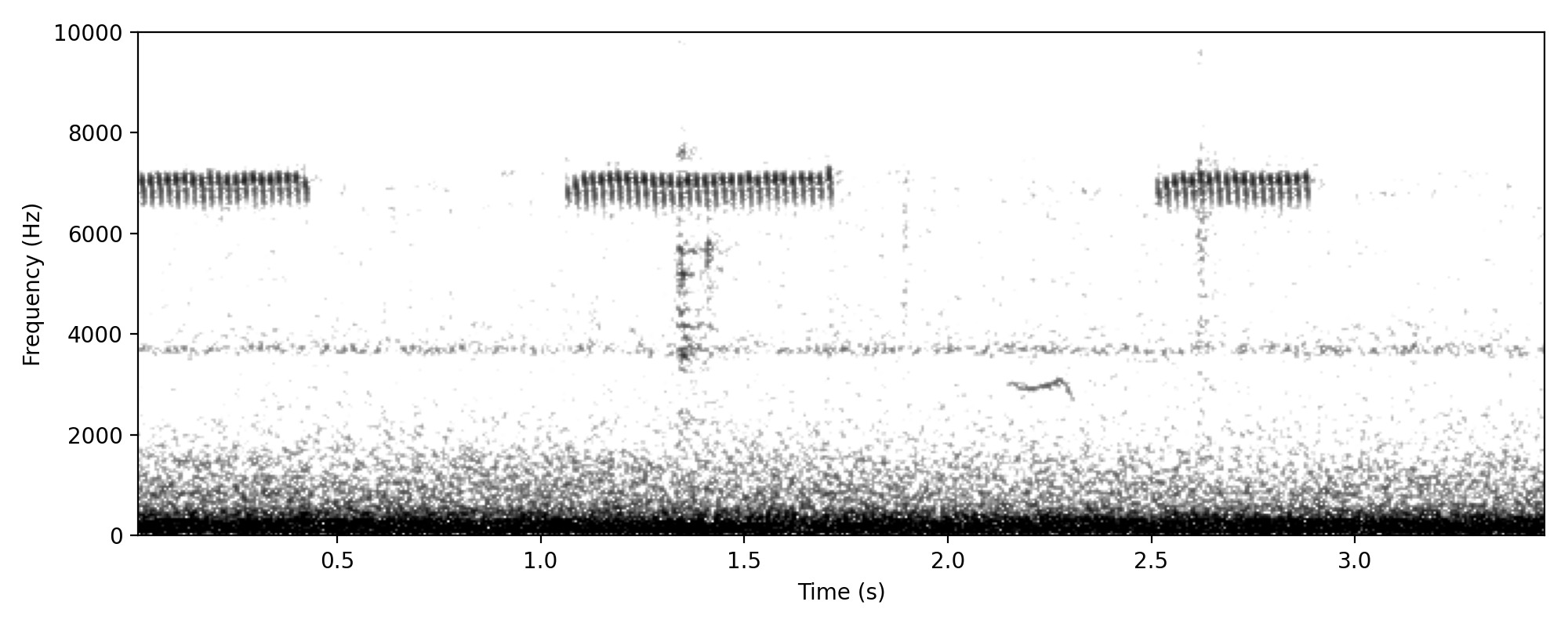
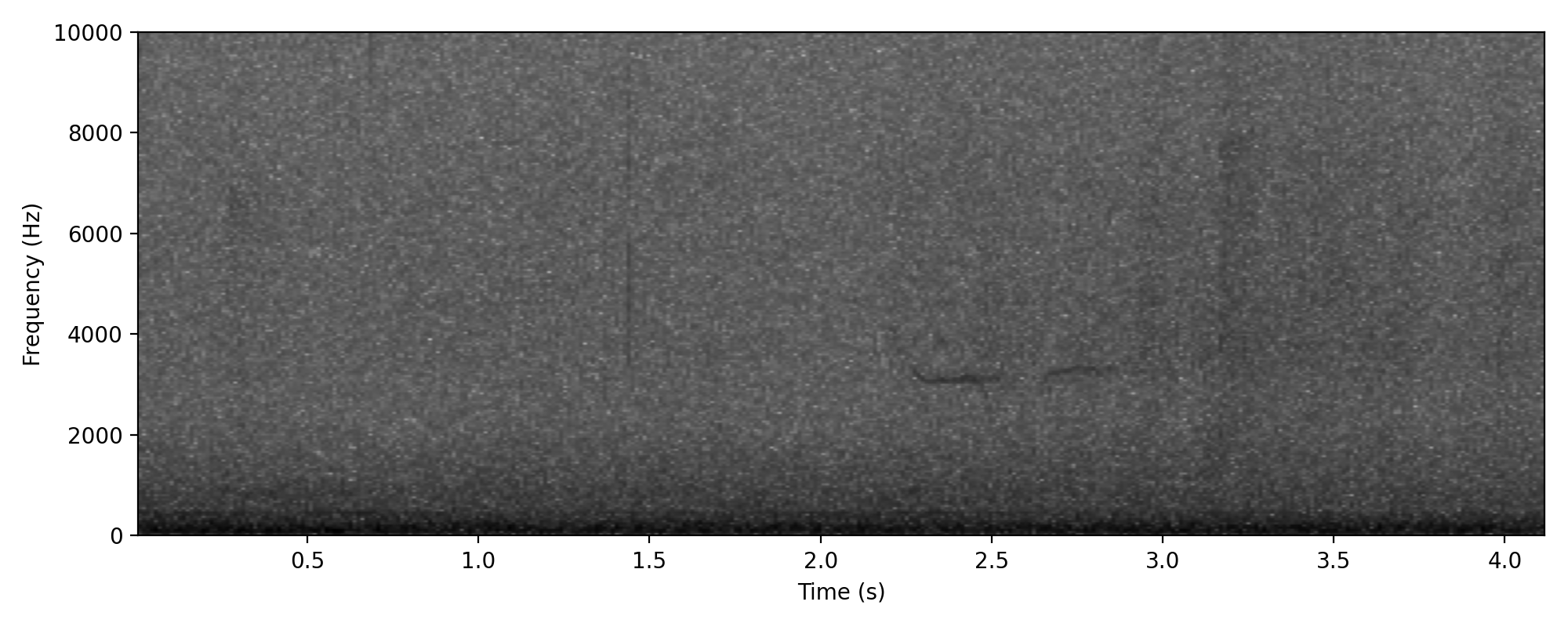
Single short wavering element at about 3kHz
Evidence for identification
Looks and sounds like a single element from the much more common Brown Quail TWO-SHORT call. Currently assumed to be a single-element variant, although it is possible later that this will turn out to be something different.
Confidence statement
Medium confidence here - would appreciate any comments.
Project detections: 5 annotations; 3 nights; recorded in March, April; most recent detection 07 Apr 2026.
Project clips
Carindale (-27.52, 153.11), 09 Mar 2023, 02:33:14, Annotation 137, Annotator: Richard Fuller, No processing applied
Carindale (-27.52, 153.11), 09 Mar 2023, 02:33:21, Annotation 138, Annotator: Richard Fuller, No processing applied
Carindale (-27.52, 153.11), 09 Mar 2023, 02:33:24, Annotation 139, Annotator: Richard Fuller, No processing applied
Brown Quail TWO-SHORT Strongly supported
Putative nocturnal call type
This is not the classic TWO-NOTE WHISTLE described in HANZAB, which is a territorial call comprising a short note and then a long rising note; instead this call is two short whistles of roughly similar length. It is commonly given in the daytime and is well known. Still need to work out what name to give to this call. It is the only recognisable Brown Quail vocalisation so far heard in Aus NFC study.
Evidence for identification
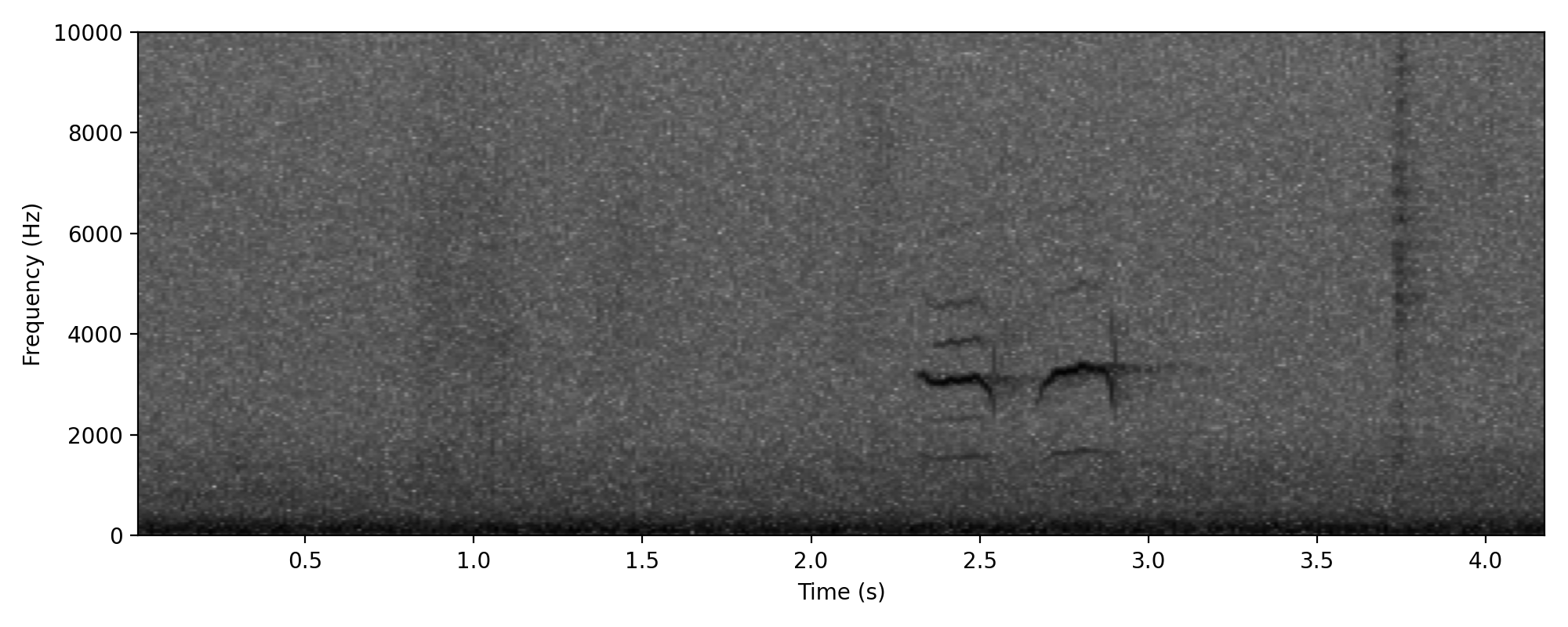
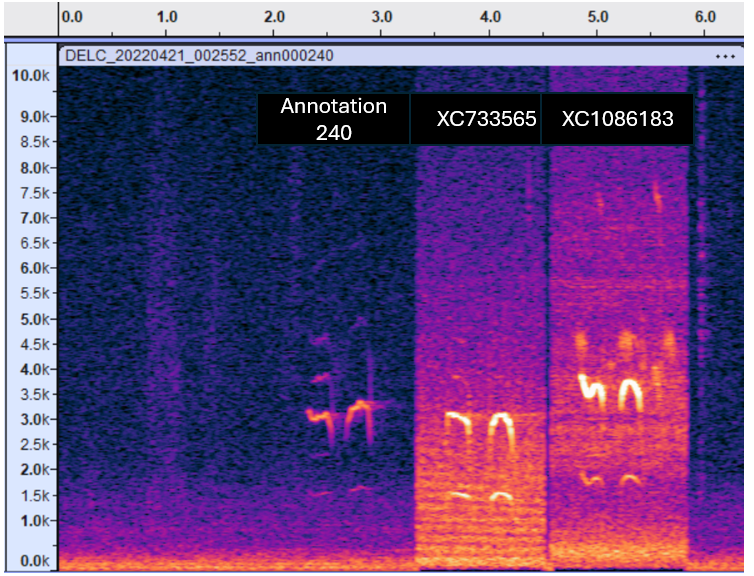
Main elements at 3kHz match reference calls, occuring in two hump-shaped components, harmonic structure matches reference calls (including a lower harmonic at 1.5kHz), and duration is similar.
Confidence statement
Sounds very similar to several recordings from XC and Macaulay. Comparison image shows strong match (see comparison image)
Similar species / confusion risks
Not obvious what this could be other than Brown Quail.
Project detections: 164 annotations; 32 nights; recorded in January, March, April, May, July, September, October, November; most recent detection 05 Sep 2026.
Project clips
Clear example of the typical NFC of this species. Featured
Carindale (-27.52, 153.11), 21 Apr 2022, 03:25:47, Annotation 240, Annotator: Richard Fuller, No processing applied
Rather faint example.
Carindale (-27.52, 153.11), 21 Apr 2022, 03:25:02, Annotation 239, Annotator: Richard Fuller, No processing applied
Very faint example to show how apparently far away these calls can be detected.
Carindale (-27.52, 153.11), 09 Mar 2023, 03:24:59, Annotation 146, Annotator: Richard Fuller, No processing applied